

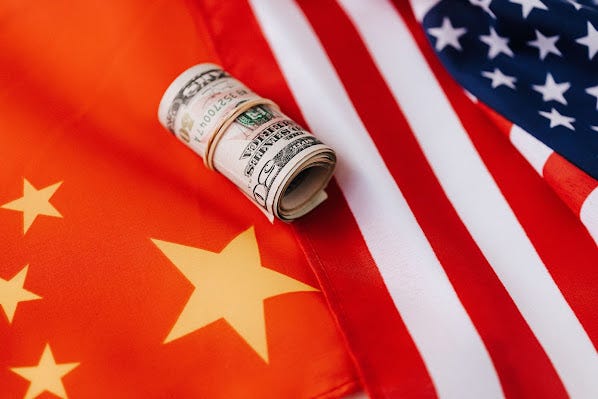
The unexpected $30 billion trade truce between the United States and China, framed publicly as an effort toward strategic stability, masks an expedient arrangement that fails to resolve core structural conflicts. Critical minerals, AI governance, and intellectual property remain key friction points in the relationship. Rather than genuine reconciliation, the agreement reflects short-term domestic pressures. Washington seeks tariff relief to ease cost-of-living inflation ahead of high-stakes November 2026 midterm elections, while Beijing aims to prop up its sluggish export economy without undertaking difficult domestic structural reforms.
Market Displacement and Multilateral Erosion
For middle powers, this bilateral alignment creates severe commercial and structural vulnerabilities. Canada is a case in point. In a constrained Chinese market with muted consumer demand, state-mandated purchase quotas and preferential tariff concessions on American agricultural, forestry, and energy exports directly crowd out Canadian producers. Beyond immediate market displacement, the deal erodes the multilateral, rules-based trading system that shields smaller economies from unilateral coercion. This vulnerability was demonstrated by China’s punitive trade restrictions against Canada following the 2018 Meng Wanzhou arrest.
A major contributor to this erosion is Washington’s persistent narrative that it disproportionately shoulders global governance burdens. This ignores the billions committed by allies to support rules-based governance. Canada has invested $2.8 billion, the European Union $35 billion, and Australia $4.6 billion to strengthen critical mineral supply chains and counter Chinese export controls.
Vulnerability to Bilateral Coercion
Superpower unilateralism also forces middle powers into unequal arrangements while suppressing domestic investment through uncertainty in trade relations. Recent pressures, including stalled CUSMA negotiations over U.S. attempts to curtail Canadian trade agreements with third nations, alongside targeted Chinese export controls, demonstrate that superpower coercion is at its peak in bilateral settings and dilutes only when smaller economies act collectively.
Strategic Diversification Beyond Superpowers
Middle powers cannot afford to preserve a legacy U.S.-centric framework as their sole trading pillar. Instead, they must actively institutionalize trade diversification. This includes expanding regional pacts like the CPTPP, pursuing regulatory harmonization between major blocs following the EU-Mercosur precedent, and maximizing agreements like CETA. The strategic objective is not to abandon the American market, but to establish sufficient independent, rules-based trade options to negotiate with superpowers from a position of collective strength and political autonomy.
By Farshid Keramat
Editor’s Note: This article is a condensed policy digest. The original, full-length analysis was published by the Tessera Institute for Global Affairs. Read the complete article here.